Friday, October 9, 2009

A Windows to Help You Forget


In just two weeks, on Oct. 22, Microsoft's long operating-system nightmare will be over. The company will release Windows 7, a faster and much better operating system than the little-loved Windows Vista, which did a lot to harm both the company's reputation, and the productivity and blood pressure of its users. PC makers will rush to flood physical and online stores with new computers pre-loaded with Windows 7, and to offer the software to Vista owners who wish to upgrade.

With Windows 7, PC users will at last have a strong, modern successor to the sturdy and familiar, but aged, Windows XP, which is still the most popular version of Windows, despite having come out in 2001. In the high-tech world, an eight-year-old operating system is the equivalent of a 20-year-old car. While XP works well for many people, it is relatively weak in areas such as security, networking and other features more important today than when XP was designed around 1999.

After using pre-release versions of Windows 7 for nine months, and intensively testing the final version for the past month on many different machines, I believe it is the best version of Windows Microsoft has produced. It's a boost to productivity and a pleasure to use. Despite a few drawbacks, I can heartily recommend Windows 7 to mainstream consumers.

Like the new Snow Leopard operating system released in August by Microsoft's archrival, Apple, Windows 7 is much more of an evolutionary than a revolutionary product. Its main goal was to fix the flaws in Vista and to finally give Microsoft customers a reason to move up from XP. But Windows 7 is packed with features and tweaks that make using your computer an easier and more satisfying experience.

Windows 7 introduces real advances in organizing your programs and files, arranging your taskbar and desktop, and quickly viewing and launching the page or document you want, when you want it. It also has cool built-in touch-screen features.

It removes a lot of clutter. And it mostly banishes Vista's main flaws -- sluggishness; incompatibility with third-party software and hardware; heavy hardware requirements; and constant, annoying security warnings.
I tested Windows 7 on 11 different computers, ranging from tiny netbooks to standard laptops to a couple of big desktops. These included machines from Lenovo, Hewlett-Packard, Dell, Acer, Asus, Toshiba and Sony. I even successfully ran it on an Apple Macintosh laptop. On some of these machines, Windows 7 was pre-loaded. On others, I had to upgrade from an earlier version of Windows.

In most cases, the installation took 45 minutes or less, and the new operating system worked snappily and well. But, I did encounter some drawbacks and problems. On a couple of these machines, glacial start-up and reboot times reminded me of Vista. And, on a couple of others, after upgrading, key features like the display or touchpad didn't work properly. Also, Windows 7 still requires add-on security software that has to be frequently updated. It's tedious and painful to upgrade an existing computer from XP to 7, and the variety of editions in which Windows 7 is offered is confusing.

Finally, Microsoft has stripped Windows 7 of familiar built-in applications, such as email, photo organizing, address book, calendar and video-editing programs. These can be downloaded free of charge, but they no longer come with the operating system, though some PC makers may choose to pre-load them.

In recent years, I, like many other reviewers, have argued that Apple's Mac OS X operating system is much better than Windows. That's no longer true. I still give the Mac OS a slight edge because it has a much easier and cheaper upgrade path; more built-in software programs; and far less vulnerability to viruses and other malicious software, which are overwhelmingly built to run on Windows.

Now, however, it's much more of a toss-up between the two rivals. Windows 7 beats the Mac OS in some areas, such as better previews and navigation right from the taskbar, easier organization of open windows on the desktop and touch-screen capabilities. So Apple will have to scramble now that the gift of a flawed Vista has been replaced with a reliable, elegant version of Windows.

Here are some of the key features of Windows 7.

New Taskbar: In Windows 7, the familiar taskbar has been reinvented and made taller. Instead of mainly being a place where icons of open windows temporarily appear, it now is a place where you can permanently "pin" the icons of frequently used programs anywhere along its length, and in any arrangement you choose. This is a concept borrowed from Apple's similar feature, the Dock. But Windows 7 takes the concept further.

For each running program, hovering over its taskbar icon pops up a small preview screen showing a mini-view of that program. This preview idea was in Vista. But, in Windows 7, it has been expanded in several ways. Now, every open window in that program is included separately in the preview. If you mouse over a window in the preview screen, it appears at full size on your desktop and all other windows on the desktop become transparent -- part of a feature called Aero Peek. Click on the window and it comes up, ready for use. You can even close windows from these previews, or play media in them.

I found this feature more natural and versatile than a similar feature in Snow Leopard called Dock Expose.
You can also use Aero Peek at any time to see your empty desktop, with open windows reduced to virtual panes of glass. To do this, you just hover over a small rectangle at the right edge of the taskbar.
Taskbar icons also provide Jump Lists -- pop-up menus listing frequent actions or recent files used.

Desktop Organization: A feature called Snap allows you to expand windows to full-screen size by just dragging them to the top of the screen, or to half-screen size by dragging them to the left or right edges of the screen. Another called Shake allows you to make all other windows but the one you're working on disappear by simply grabbing its title bar with the mouse and shaking it several times.

File Organization: In Windows Explorer, the left-hand column now includes a feature called Libraries. Each library -- Documents, Music, Pictures and Videos -- consolidates all files of those types regardless of which folder, or even which hard disk, they live in.

Networking: Windows 7 still isn't quite as natural at networking as I find the Mac to be, but it's better than Vista. For instance, now you can see all available wireless networks by just clicking on an icon in the taskbar. A new feature called HomeGroups is supposed to let you share files more easily among Windows 7 PCs on your home network. In my tests, it worked, but not consistently, and it required typing in long, arcane passwords.

Touch: Some of the same kinds of multitouch gestures made popular on the iPhone are now built into Windows 7. But these features won't likely become popular for a while because to get the most out of them, a computer needs a special type of touch screen that goes beyond most of the ones existing now. I tested this on one such laptop, a Lenovo, and was able to move windows around, to resize and flip through photos, and more.

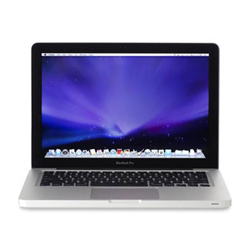
Speed: In my tests, on every machine, Windows 7 ran swiftly and with far fewer of the delays typical in running Vista. All the laptops I tested resumed from sleep quickly and properly, unlike in Vista. Start-up and restart times were also improved. I chose six Windows 7 laptops from different makers to compare with a new MacBook Pro laptop. The Mac still started and restarted faster than most of the Windows 7 PCs. But the speed gap has narrowed considerably, and one of the Lenovos beat the Mac in restart time.

Nagging: In the name of security, Vista put up nagging warnings about a wide variety of tasks, driving people crazy. In Windows 7, you can now set this system so it nags you only when things are happening that you consider really worth the nag. Also, Microsoft has consolidated most of the alerts from the lower-right system tray into one icon, and they seemed less frequent.

Compatibility: I tried a wide variety of third-party software and all worked fine on every Windows 7 machine. These included Mozilla Firefox; Adobe Reader; Google's Picasa and Chrome; and Apple's iTunes and Safari.

I also tested several hardware devices, and, unlike Vista, Windows 7 handled all but one smoothly. These included a networked H-P printer, a Canon camera, an iPod nano, and at least five external flash drives and hard disks. The one failure was a Verizon USB cellular modem. Microsoft says you don't need external software to run these, but I found it was necessary, and even then had to use a trick I found on the Web to get it to work.

System Requirements: Nearly all Vista PCs, and newer or beefier XP machines, should be able to run Windows 7 fine. Even the netbooks I tested ran it speedily, especially with the Starter Edition, which lacks some of the powerful graphics effects in the operating system. (Other netbooks will be able to run other editions.)

If you have a standard PC, called a 32-bit PC, you'll need at least one gigabyte of memory, 16 gigabytes of free hard-disk space and a graphics system that can support Microsoft technologies called "DirectX 9 with WDDM 1.0." You'll also need a processor with a speed of at least one gigahertz. If you have a newer-style 64-bit PC, which can use more memory, you'll need at least two gigabytes of memory and 20 gigabytes of free hard disk space. In either case, you should double the minimum memory specification.

Installation, Editions and Price: There are four editions of Windows 7 of interest to consumers. One, a limited version called Starter, comes pre-loaded on netbooks. A second, called Business, is mainly for people who need to tap remotely into company networks (check with your company to see if you need this). A third, called Ultimate, is mainly for techies who want every feature of all other editions. Most average consumers will want Home Premium, which costs $120 for upgrades.

The system for upgrading is complicated, but Vista owners can upgrade to the exactly comparable edition of Windows 7 while keeping all files, settings and programs in place.

Unfortunately, XP owners, the biggest body of Windows users, won't be able to do that. They'll have to wipe out their hard disks after backing up their files elsewhere, then install Windows 7, then restore their personal files, then re-install all their programs from the original CDs or downloaded installer files. Then, they have to install all the patches and upgrades to those programs from over the years.

Microsoft includes an Easy Transfer wizard to help with this, but it moves only personal files, not programs. This painful XP upgrade process is one of the worst things about Windows 7 and will likely drive many XP owners to either stick with what they've got or wait and buy a new one.

In my tests, both types of installations went OK, though the latter could take a long time.

Bottom line: Windows 7 is a very good, versatile operating system that should help Microsoft bury the memory of Vista and make PC users happy.

Write to Walter S. Mossberg at walt.mossberg@wsj.com

Nissan's electric vehicle tilts into corners


ATSUGI, Japan – Nissan's Land Glider electric vehicle tilts from side to side, sashaying into curves by up to a 17-degree angle, as though showing off in a fashion statement that it's zero-emissions.

The wheel segments of the car can move separately from the cabin, allowing the car, still an experimental concept model, to sway and swerve, almost like a motorcycle.

Nissan Motor Co. project design director Takashi Nakjima says Land Glider is designed to be a "personal city commuter."

In a demonstration for reporters, the car glided around on a test course at Nissan's design center, outside Tokyo, leaning slowly to one side, and then the other, as it turned tight corners.

Just 110 centimeters (43 inches) wide, Land Glider has sensors to calculate speed and level of lean required for corners, and can maneuver through narrow streets and fit into tight parking spaces, according to Yokohama-based Nissan..

People aboard sit in a line, one behind the other, not next to each other as in traditional two-seaters.

Reporters got a preview look of the "concept model" but no test drive, of the Land Glider. There are no immediate plans for commercial production.

It will have its world premiere at the Tokyo Motor Show, opening to media Oct. 21, two days before its formal opening. The show runs through Nov. 4 in the Tokyo suburb of Chiba.

Japanese rivals Toyota Motor Corp. and Honda Motor Co. are also showing nifty electric vehicles at the show.

Toyota's FT-EV II has a roomy cube design, a relatively conventional look for electric cars. But Honda's EV-N is small and cute with an intentionally old-fashioned car shape.

"We feel exploratory efforts in electric vehicles have entered a new stage" with Land Glider, Nakajima said.

Japanese automakers say electric vehicles will largely be used initially for limited range, commuter travel.

Nissan is among the first to offer an electric vehicle, set to go on sale in Japan, the U.S. and Europe next year — the rather regular-looking Leaf.

Report: Android will leapfrog the iPhone by 2012


Watch out, iPhone—Android's nipping at your heels.Researchers at Gartner (via AppleInsider) are predicting that the global market share for Google's Android mobile OS could overtake the iPhone's in a little over two years, with Android poised to leapfrog Apple into the No. 2 spot.

That would leave the iPhone in the No. 3 position—right where it is now, behind BlackBerry and Nokia's Symbian OS, according to Gartner. The industry researchers believe that by 2012, Research in Motion (the company behind the BlackBerry) will have lost 7 percent of its market share, causing it to slip into fifth place (behind even Windows Mobile). Android, meanwhile, will get a 12.9-percent boost to become the No. 2 smartphone platform in the world, with Symbian still safe in the No. 1 spot (with a dominating, although dwindling, 39 percent of the global market).

Those are just analyst predictions, of course, and two years is an eternity in the wireless world; after all, two years ago today, we were still getting used to the first iPhone.

That said, I think the gist of Gartner's prediction—that Android is poised to take the wireless market by storm—is spot on, and we've seen evidence of that in the past few months and weeks.

Google's open-source Android platform—which boasts one of the finest touchscreen interfaces out there, iPhone included—came slow out of the gates in fall 2008 with the solid, if uninspiring T-Mobile G1. We had to wait almost a year for the next Android phone in the U.S., but we finally got one this past August with the G1's follow-up, the HTC-made myTouch 3G (also on T-Mobile).

Soon after, what started as a trickle quickly became a flood. Sprint trotted out its first Android phone, the eye-catching, touchscreen HTC Hero, and then T-Mobile followed suit with the Motorola Cliq, its third Android handset ... followed by the Samsung Behold II just a few days ago. On Tuesday, Verizon Wireless announced it would launch a pair of Android phones before the end of the year, while Sprint announced its second Android phone—the Samsung Moment—a day later. Oh, and now there's rumors that Dell wants in on the Android action, with a new handset possible slated for iPhone carrier AT&T.

Let's see, that's ... one, two, three, four ... five new Android phones in in the past few months, with two more—and possibly even a third—due by the end of the year, from two (or maybe three) different manufacturers and three (possibly four) carriers. Some will be better than others, but consumers will have plenty of models (and carriers) from which to choose.

Of course, a bunch of new phones on the market doesn't mean diddly unless someone buys them, and for now, Apple has a solid 10.8- versus 1.6-percent lead over Android in terms of global smartphone market share. But Apple is the only company making iPhones, while the open-source (and high-quality) Android platform is available to all manufacturers and carriers—and from what we've been seeing, they're taking the ball and running with it.

Related:
Multi-phone Android platform seen overtaking iPhone by 2012 [AppleInsider]

Wednesday, October 7, 2009

Worst Cars of the 2000s

Even with the strides that cars have made in recent years, let's face it: There have been some real stinkers, too. Whether poorly executed, ill-conceived or downright dreadful to look at, these 10 stand out for all the wrong reasons. A car had to be sold at any point in the 2000s to be eligible for this list; some of these models were only on the market for a few years, while others are still being sold today.

10. Pontiac Aztek

2001-2005
The Aztek was criticized for the duration of its life for its ghastly styling. Design is subjective, so what do you think of the Aztek shown here? Were the critics wrong? Yeah, we didn't think so.

9. Daewoo Anything

1999-2002
We had just tested a Suzuki Esteem and marveled at how competent even the cheapest little econoboxes had become when a leather-lined Leganza midsize sedan showed up — the best Daewoo had to offer. We mused over which would kill us first: the toxic gases from the cheap interior or the recalcitrant transmission and inconsistent acceleration. Three days into the loan, the first Daewoo crash tests in U.S. history came out, and we called Daewoo and told them to come pick up the car. We'd never done that before, and we haven't since.

8. Isuzu VehiCROSS

1999-2002
The outrageous Isuzu VehiCROSS two-door SUV, whose extreme styling drew varied reactions, lasted from 1999 to 2001, and even that's surprising. The fanglike grille uprights made it look like it would eat you, which was scary mainly because inside the VehiCROSS was a place no one wanted to be. Headroom was minimal, and the low roof blocked even shorter drivers' view. If the noisy cabin didn't get to you, the punishing ride would. Isuzu deserved credit for taking a chance then on a design likely to find more admirers now, and it deserved scorn for a 2001 sticker price that would be just as preposterous in the current market. The VehiCROSS cost $30,350 by the time it fired up its interplanetary drive and went back where it belonged.

7. Jaguar X-Type

2002-2008
 Jaguar X-Type
Jaguar X-Type
In the early 2000s, the class of entry-level luxury cars was growing. Most were sporty and started at $30,000 or less. Wanting in, Jaguar came out with the X-Type. From the get-go, critics warned that a cheap Jag would be bad for the brand and that Ford — which bought the company in 1989 — would probably cut corners and sacrifice quality. That was before they saw the product. Sharing its front-drive platform with a European Ford Mondeo, the X-Type was a too-small, not-so-sporty sedan with all-wheel drive that was hamstrung by some of the forewarned quality issues. The trap was clearly visible from miles away, and Ford walked right into it. A 2002 Jaguar X-Type can be had for up to $8,500. A 2002 Honda Civic goes for up to $9,275.

6. Pontiac Sunfire

1995-2005
The Sunfire managed the rare feat of having a worse interior than its GM twin, the Chevy Cavalier. Cheap interior plastics run amok, a coarse four-cylinder engine and horrendous crash-test ratings sealed its fate. On the flip side, the Sunburn was probably responsible for untold thousands of rental-car upgrades: "Honey, remember Fort Lauderdale last summer? Trust me, we want the Grand Am."

5. Cadillac Catera

1997-2001
To think that Germany's Opel is now the source of many of GM's strongest new models...

In the late '90s, the Opel Omega begat a Cadillac that was sporty in theory but soft and underpowered in practice, rear-wheel-drive in design but front-wheel-drive in feel. And that's just the car. Cadillac didn't help its case with advertising that included the tagline "The Caddy That Zigs," supermodel Cindy Crawford, an animated duck, and the suggestion to "lease a Catera" with the response, "Who's Lisa Catera?" The geniuses responsible for the Catera should have been exiled, but we suspect they went on to develop something called the Pontiac Aztek. Upgrades and deep discounts in 2001 couldn't save the Catera; it went to the duck blind in the sky in 2002.

4. Toyota Echo

2000-2005
The Echo subcompact's high seating position and center-mounted instrument panel were two well-intentioned features that were summarily rejected by consumers (though they would find their proponents in later years and other models). Call the Echo ahead of its time if you must; mainly it just wasn't a very good car. In taking over for the Tercel — a boring but popular choice against offerings from Suzuki, Geo and pre- renaissance Kia and Hyundai — the Echo proved that sometimes bland is better than bold. The problem wasn't that the youth-targeted Echo appealed more to older buyers than to younger ones, it was that there weren't enough of either.

3. Jeep Compass

2007-present
We could have easily chosen the Dodge Caliber for this list — a compact hatchback with unremarkable gas mileage, refinement and crash-test scores — but the hapless Compass edged it out. Why? Besides the fact that you shouldn't spread lackluster product around to more than one division (the Compass is related to the Caliber), it doesn't belong in the Jeep lineup, a brand known and respected for its off-road ability. The Compass is a soft-roading poseur, and not a good one at that.

2. Chrysler Sebring

1995-present
The previous-generation Sebring wasn't a bad car in its day, but Chrysler dropped the ball with the redesigned 2007 model. With a weak base powertrain, uncomfortable front seats, poor interior quality and haphazard styling, it never had a chance in the highly competitive midsize-sedan segment.

1. Smart ForTwo

2008-present
 2009 smart fortwo
2009 smart fortwo
We don't have a problem with small cars in general (we're big fans of the Mini Cooper), just with ones that don't deliver on the benefits of going small. The pint-sized ForTwo sacrifices a lot of passenger space for a relatively unimpressive 41 mpg on the highway, has an SUV-like propensity to roll over, and is equipped with an aggravating sequential manual transmission. Sure, the ForTwo looks cute, but after you drive it you won't be smiling anymore.

Kelsey Mays contributed to this story.

Tuesday, October 6, 2009

Apple Tablet Most-Watched Product of 2010, But By Whom?

There is no question that PC pundits are eagerly awaiting Apple's supposed new tablet, but what about customers? This is a high-risk game and Apple must know it.

Apple is widely believed to be working on a tablet for introduction in early 2010, though the timing may be more flexible than recent rumor suggests.

The company needs to be very sure it has a hit or should start managing customer expectations. If not, anything it does will that falls short of perfection will be considered a failure.

For all the talk, a key mystery remains: What will it take to get people to purchase them? Apple is in the best position to know, based on its experiences with the iPhone and iPod touch and 2 billion downloaded applications.

The challenge is building a device that matches a thin form factor with a color screen, large memory, powerful processor, and long battery life. In addition, it needs to sell for a "popular" price, which seems to be in the $500-$800 range.

It is a tall order and if Apple has any doubts, it would be better to again delay its tablet dreams--as the company has repeatedly done according to the New York Times

My take: Key will be finding applications, such as entertainment, that lend themselves to what amounts to a giant iPod. I have preferred using the term "media pad" to describe what Apple is doing and am coming back to that usage.

Using a tablet as a media player makes good sense and may be enough to sell a couple of million new Apple tablets. Key will be hitting form factor, performance, and battery life expectations. Steve Jobs knows this and has reportedly shelved earlier prototypes.

Apple tablet hype is beginning to spin out of control. If the company is concerned the new device will not live up to incredible expectations, it has not shown it. Maybe it will be perfect, but if it isn't, Apple needs to start telling us what to expect.

David Coursey tweets as @techinciter and can be contacted via his Web site.

Sunday, October 4, 2009

One Piece 559, Naruto 466 and Bleach 376

posted by hyko - 2 days ago (last edited yesterday)
  One Piece 559 is up now, thanks to FrankyHouse!!

Also Naruto 466 and Bleach 376 by SleepyFans are now up too!

Roach tells Manny: Get serious now

BAGUIO CITY – While storm signal warnings were raised in different parts of Luzon after a super typhoon made landfall, Freddie Roach had an alert of his own for Manny Pacquiao here.

“No more fun and games,” a stern-faced Roach told reporters at the end of training yesterday at the Shape Up gym.

The Filipino ring icon showed up far sharper than he did the day before for another workout that featured a snappy shot to his trainer’s protected kidney.

Roach still expressed disappointment, though, at how the camp was running going into the final six weeks of preparation for the match against Miguel Cotto.

“I’m a little disappointed at the way camp has been running,” said Roach, citing evening basketball games and early-morning runs with military cadets that are not part of Pacquiao’s training regimen.

“Running with the cadets was good and all, but we’re preparing for a fight here,” said the two-time Trainer of the Year winner. “He can’t play basketball, run and train at the same time.”

Pacquiao faces Cotto on November 14 at the MGM Grand in Las Vegas, where the Filipino superstar will go after the Puerto Rican’s WBO welterweight belt, in a bid to become the first boxer to win a seventh world title in as many weight classes.

Pacquiao was a whole lot snappier than he was the day before, when sparring mate Shawn Porter literally had his way with the pound-for-pound king.

“He was better than yesterday but that was with the mitts,” said Roach. “The job is still to bring what he does during mitts to fight night.”

Pacquiao admitted he felt better, despite the early-morning run with cadets at the Philippine Military Academy.

“My stamina has improved and I think my preparations are getting better,” said the reigning light welterweight champion after a lung-busting workout.

Pacquiao admitted he was sluggish the day before although he said: “It’s better that way, there’s a challenge. One thing good when I train is that I easily recover my old form.”

Roach said he was prepared to start running a tighter camp, adding that he was willing to go to the extreme to make sure Pacquiao trains the way he normally does at the Wild Card gym in Hollywood: No distractions.

“He could [play basketball] on Sundays, but not on training days,” Roach said. “Training for the fight is hard work and he’s going to miss more days of running if he continues playing basketball. If I have to take out the rim or pop the basketballs, I’ll do it.”

Roach, though, had little problems with Pacquiao as the two discussed and played out strategy.

Every now and then, Roach would holler words of encouragement during the 14-round mitts exercise.

“Don’t try to win the exchange, don’t just stay there after [a one-two combination], stay at the side, move to the side,” Roach yelled every now and then. “When you throw your jab, don’t stay in front of [Cotto].”

When Pacquiao got something right, Roach would say: “Very good, Manny” or “beautiful shot,” particularly after a snappy hook that tagged Roach’s kidney.

“He knocked the wind out of me for a while,” Roach said.

 Pacquiao’s training will end October 24 and Roach said he hoped to bring the boxer to within “80 to 90” percent of the form he has to be in on fight night.

Yesterday’s training – which started late because Team Pacquiao was huddled in a meeting earlier in the day – ended just as storm signal No. 1 was raised over this pine-dotted city.

Meanwhile, conditioning coach Alex Ariza said Pacquiao was still at 153 pounds and he hoped to have the boxer at 150 before Team Pacquiao departs to continue the second phase of their preparations at the Wild Card gym.

“I’m more worried about him going under 150 because I’ve been two or three pounds off with him in his last two fights,” said Ariza, who wants to make sure that Pacquiao carries his strength up to the welterweight ranks, where he will face the bigger and heavier Cotto.

“We’re focused on building functional muscles and make sure he doesn’t go flat while bulking up,” said Ariza.
Pacquiao came in at 142 for the fight against Oscar De La Hoya, which was at a catch weight of 145 lb. The Filipino weighed 138 for the Ricky Hatton bout, where he knocked the Briton in two rounds to win the light welter crown.